1967
Birth near Pouni
Born at midnight, the youngest of five, in the village of Sadhini, Jammu & Kashmir.
From a remote village called Sadhini to the glaciers of Satopanth — a chronicle of renunciation, of a master found in the Himalayas, and of the sacred fires carried across India.
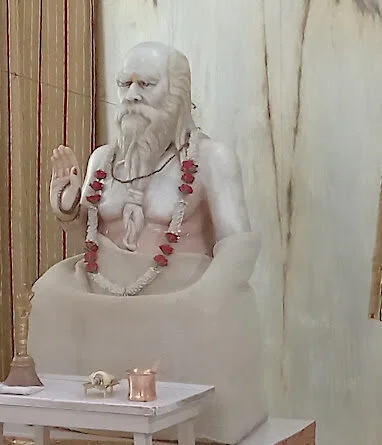
Sri Balak Yogeshwar Maharaj was born around midnight on the 30th of July, 1967 — the youngest of five children — near a town called Pouni in Jammu & Kashmir, in the north-western reach of India near the border of Pakistan. He grew up in the tiny, remote village of Sadhini, where his parents earned their livelihood by farming.
The family lovingly called the boy Yoga. He would listen, rapt, as his mother told him stories from the Bhagavat Purana — of Dhruva Maharaj and Prahlad Maharaj. Even in his early years he could sense that his life was not going to be an ordinary one. His family followed a powerful saint, Dhudahari Baba, who performed havanas in the remote mountains — and so, at a tender age, Yoga already tasted the company of the holy.
Yoga once told me, half in jest, that either he would become a great sadhu — or else a great gunda.
When Dhudahari Baba departed this world in 1984, the sadhu-sanga of his childhood had already worked so deeply upon young Yoga that he resolved to leave home and take up the life of a wandering mendicant. His family raised no objection — they understood his burning desire to discover God.
He travelled first to Haridwar, to Dhudahari Baba’s ashram, and served the goshala — the cows — for a full year. Then he left for Badrinath, where his true tapasya began. For some four or five years he met no-one, keeping a strict mauna-vratta, a vow of silence. Little is known of his practices in those years, but he was often seen upon the banks of the Alakananda, searching, in his own words, for a path not yet clearly chalked out.
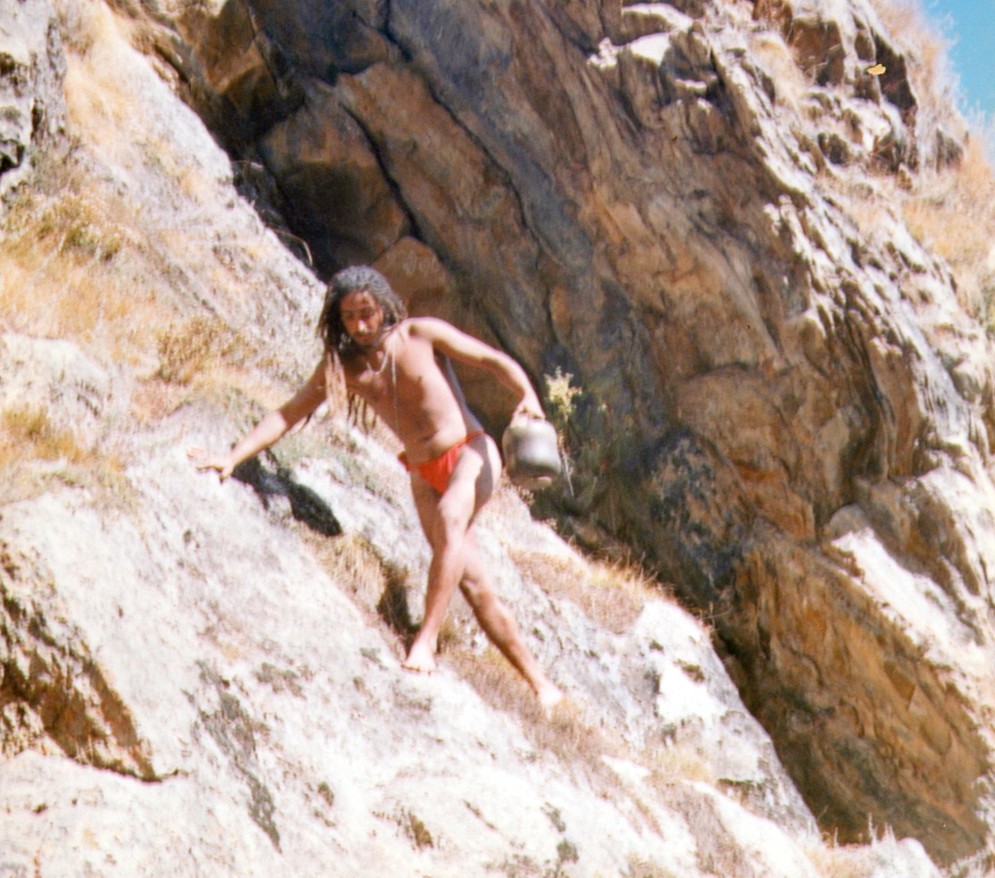
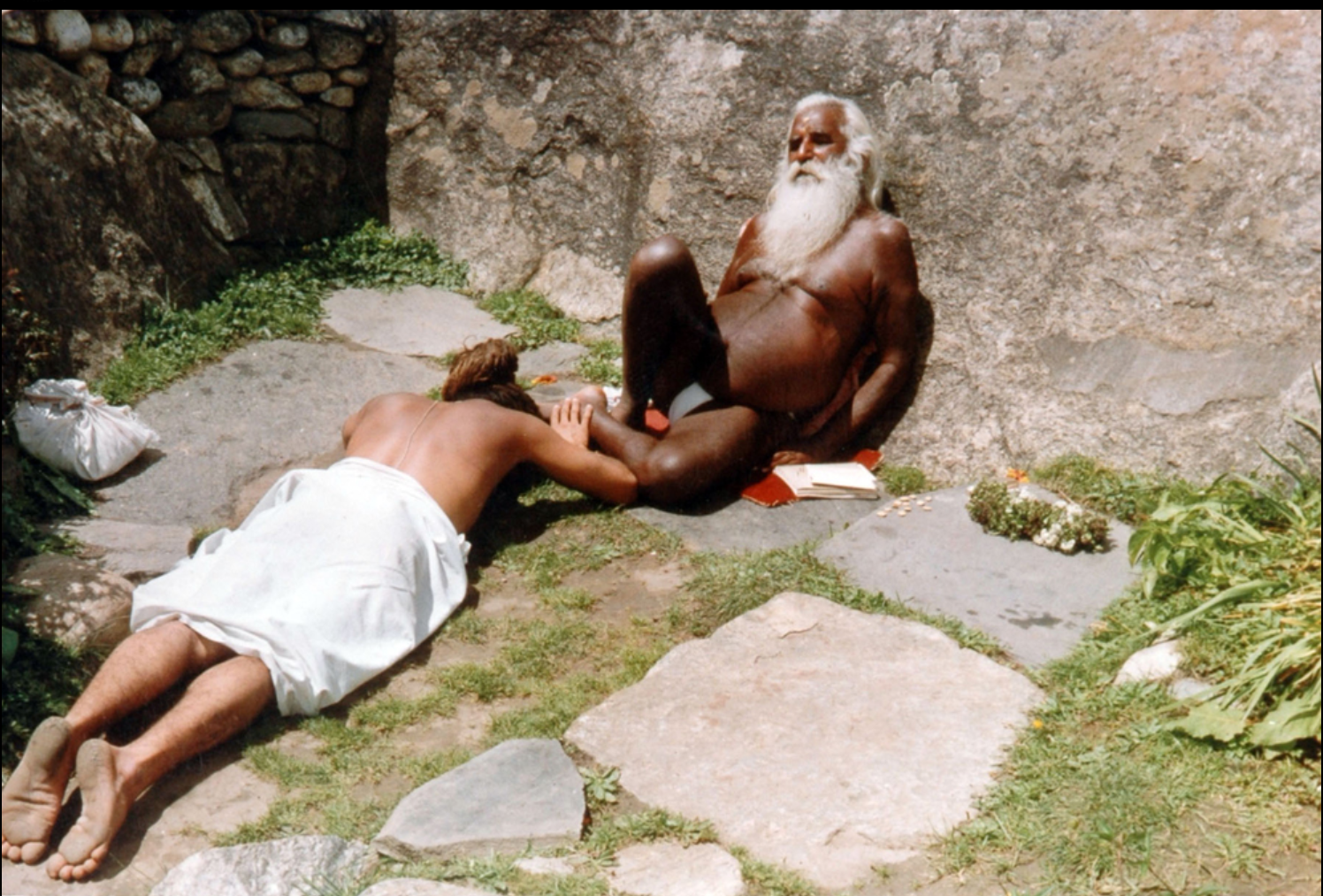
The turning of his life came when he met his diksa-guru, Sri Paramanand Avadhutji Maharaj, in the Himalayas. For the next five years Maharaj lived in his guru’s ashram and served him with rare devotion — though Avadhutji Maharaj was neither eager to accept anyone’s service nor given to speech.
Pleased at last by his disciple’s service, the master initiated him into several powerful mantras and taught him the art of kriya-yoga. Later, on Maharaj’s return from a hidden place in the high glaciers, Avadhutji Maharaj bestowed upon him an extremely rare and powerful mantra — the seed of all that would follow.
Hearing some sadhus speak of a remote place beyond the glaciers called Satopanth, hard to reach and rarely seen, Maharaj sought his guru’s leave and made his way there, staying four days before returning.
When he received the rare mantra as reward, he went at once to Haridwar, bathed at the Hari-ki-Pauri ghat, and — as an act of severe penance and humility — began a dandavat-parikrama, a prostrating, crawling pilgrimage, all the way back to Satopanth.
There, meditating in the mental presence of the master who had given him the mantra, Maharaj dived into a deep trance and received divine instruction. Chief among the revelations of those weeks was this: that he should travel across the whole country, perform havana, and turn the people to the chanting of God’s sacred names.
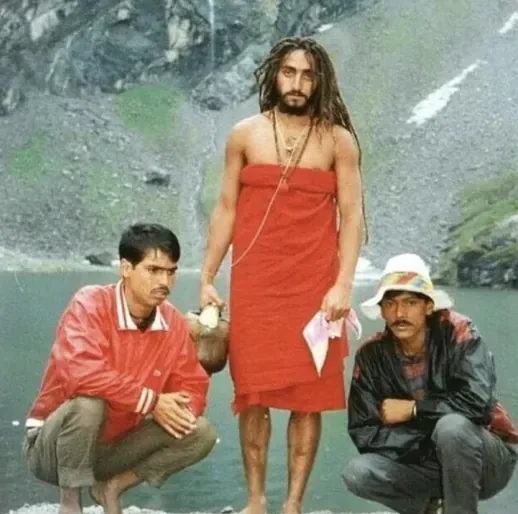
He returned to Satopanth again and again thereafter, staying two weeks at a stretch — and was seen too at Swarga Rohini beyond it, and in a cave at Nilkanth behind the great temple of Badrinath, near the crossing called Kaak Chowk.
देश भर में भ्रमण करो, हवन करो, और लोगों से भगवान के पवित्र नामों का जप कराओ।
“Travel across the land, perform the sacred fire, and turn the people to the names of God.”
At Kaak Chowk, by the wish of the pandits and people of Badrinath, Maharaj became mahant of the ancient Hanuman temple — counted among the youngest Mahamandaleshwars in all of India.
Guided by a dream, an elder from Radhakund carried sacred Radha-Krishna murtis to Badrinath, and by divine arrangement found the young saint at the temple — the beloved Deities of whom Maharaj remains most fond.
A resident named Prashant served Maharaj milk in his cave and begged for initiation. Following his own guru’s instruction to guide the common people, Maharaj began, gradually, to accept disciples.
From a village in Jammu, up the Alakananda to the roof of the Himalayas, and back to the plains — the geography of a wandering life.
Urged by devotees — and by his cousin Davinder Singh, ‘Pintu’, who had rediscovered him in Badrinath in 1995 — Maharaj at last returned to Jammu in 2003. There, in the dried-up bed of the Tawi river, he performed a vast yajna attended by nearly ten lakh people, drawing headlines across the state.
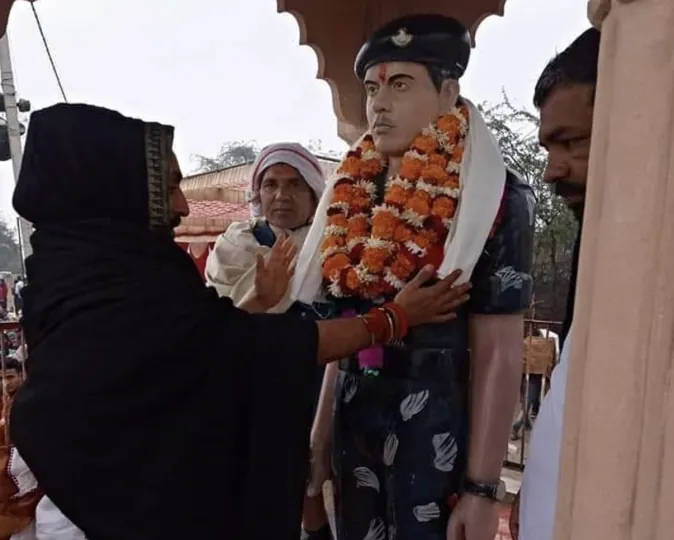
In 2006 he carried the sacred fires to Kargil — to Drass, where the war was fought — honouring the martyrs and proclaiming peace for all the world. From that seva he received a new name: Sainik Baba, the father of the soldiers.
A blessed and extraordinary saint, inspiring thousands upon their spiritual sojourn — a shining example of dedication to the Lord. Whoever has met Maharaj can never forget his gentle nature and his kindness.